Guide
Air Purifier Running Costs: Full Annual Breakdown (2026)
By Dr. Alex Chen, Indoor Air Quality Specialist · Updated 2026-03-27
This post contains affiliate links. We may earn a commission at no extra cost to you.
Air Purifier Running Costs: Full Annual Breakdown (2026)
By Dr. Alex Chen, Indoor Air Quality Specialist · Last updated March 2026
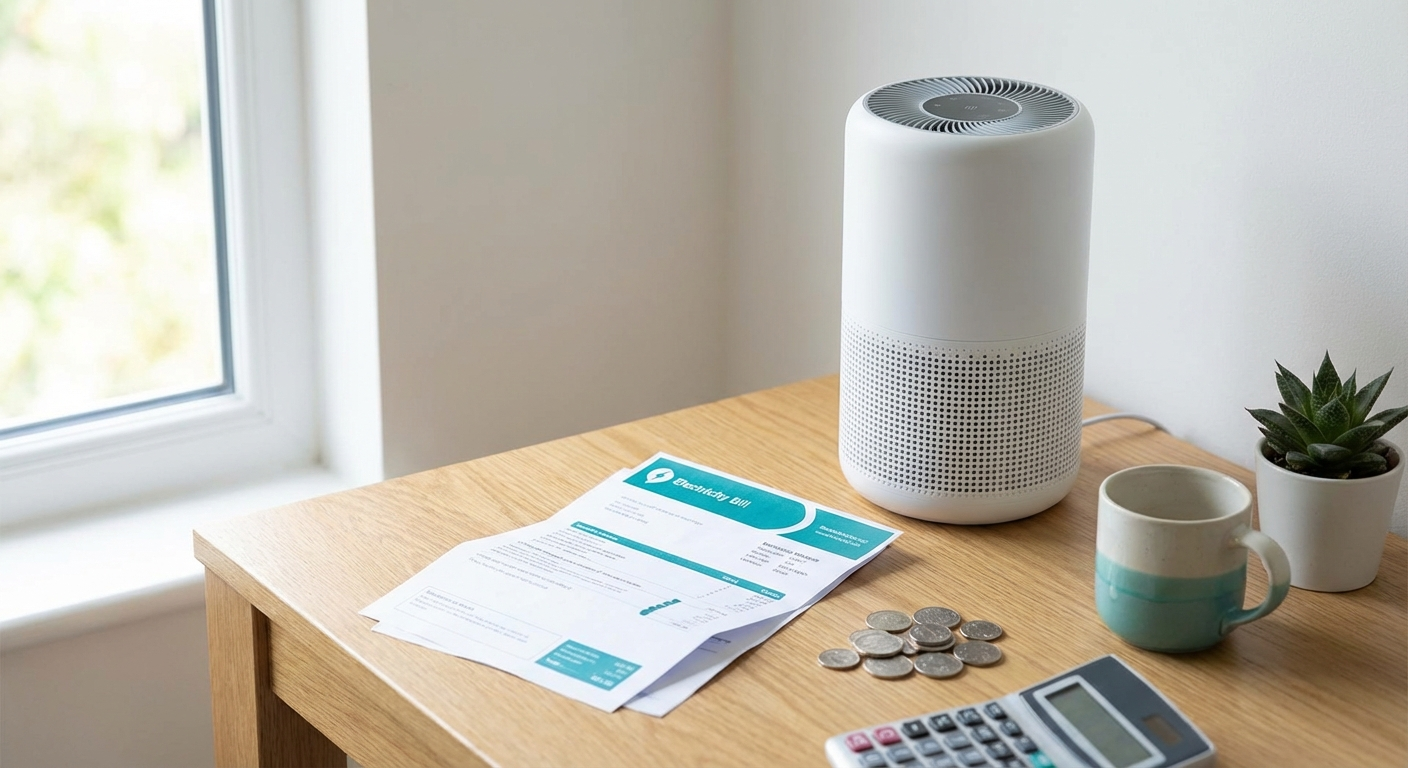
The total annual cost of running an air purifier ranges from $66 to $304, combining electricity and filter replacements. At the 2026 US average electricity rate of $0.16/kWh, most HEPA models cost $3 to $12 per month in electricity alone — less than a single cup of coffee per week. Filter replacements add $30 to $160 per year depending on the brand and filter type.
Key Takeaway
Most air purifiers cost $66–$304/year to run (electricity + filters)
The cheapest model on our list costs just $5.50/month total — less than a streaming subscription
One of the most common questions we receive at Air Purifier Report is whether running an air purifier will noticeably increase household bills. It is a valid concern — you want cleaner air, but not at the cost of an unexpectedly high electricity bill or expensive filter replacements catching you off guard.
The truth is that air purifier running costs vary dramatically between models. A compact, energy-efficient unit might add less than $6 per month to your expenses, while an oversized or premium model could cost $25 or more per month when you factor in proprietary filters.
In this comprehensive breakdown, we calculate the exact annual running cost for seven of the most popular air purifiers in 2026, explain the two cost components you need to track, and share five proven strategies for keeping expenses to a minimum. Whether you are buying your first air purifier or evaluating the ongoing cost of a model you already own, this guide gives you the hard numbers.
The Two Cost Components: Electricity and Filters
Every air purifier has two ongoing expenses that determine its total cost of ownership: electricity consumption and filter replacements. Understanding both is essential for budgeting accurately and avoiding surprises.
Electricity: The Predictable Cost
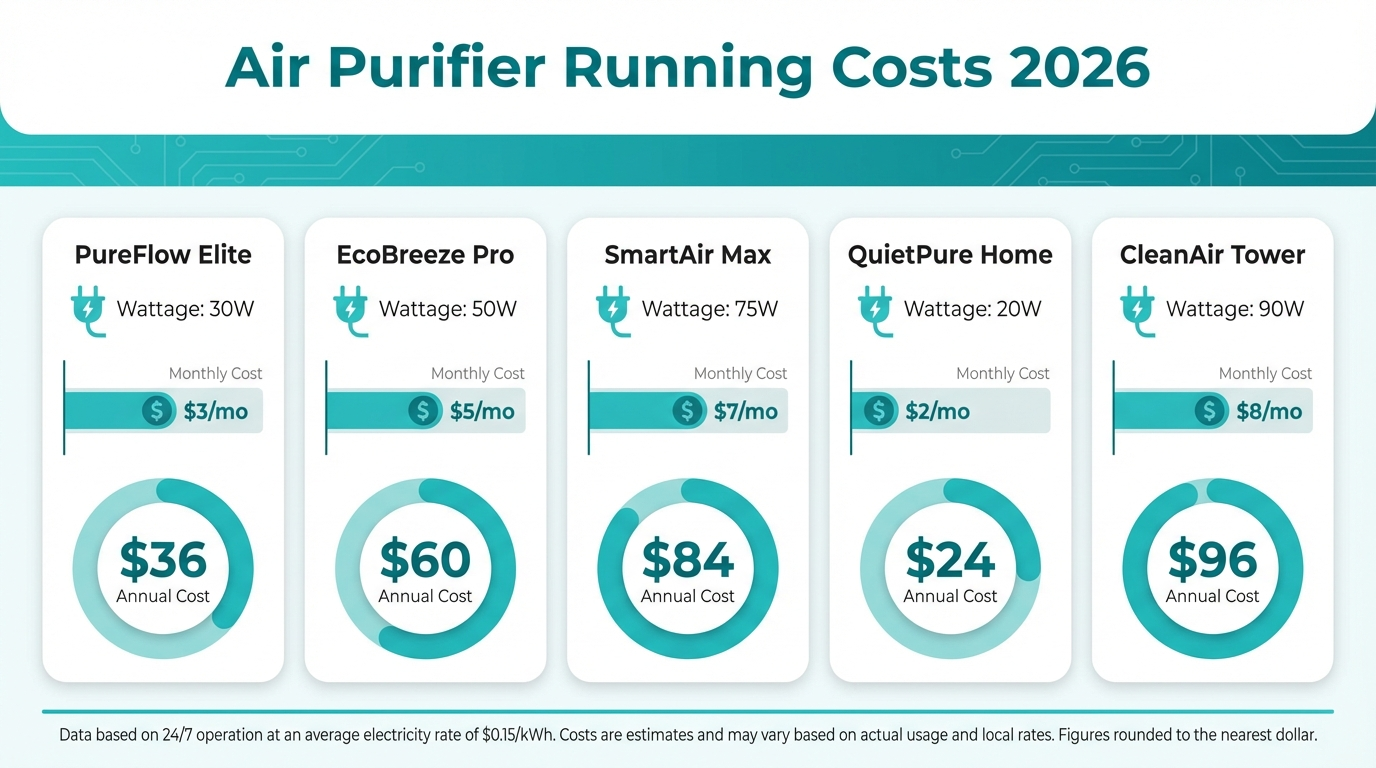
Electricity is the simpler of the two costs. Every air purifier has a rated wattage — the maximum power it draws at the highest fan speed. In practice, most people run their purifiers on medium or auto mode, which draws significantly less power.
A typical mid-range HEPA purifier draws 30 to 60 watts on medium speed. At the 2026 US national average electricity rate of $0.16 per kilowatt-hour, that translates to roughly $2 to $5 per month when running 12 hours per day. Even running 24/7, most models stay under $10 per month in electricity.
The electricity cost is predictable because wattage ratings are published by every manufacturer and electricity rates are consistent month to month. You can calculate your exact cost before you buy.
Filter Replacements: The Variable Cost
Filter replacements are where costs diverge significantly between brands. Some manufacturers sell replacement HEPA filters for $20 to $30 that last 12 months. Others, particularly premium brands, charge $60 to $80 for proprietary filters that need replacing every 6 months.
Filter lifespan also depends on your environment. If you live in an area with high outdoor pollution, near a busy road, or have multiple pets, your filters will load faster and need more frequent replacement. A filter rated for 12 months in clean suburban air might last only 6 to 8 months in a dusty urban apartment.
This variability is why filter costs are the factor that separates budget-friendly purifiers from expensive ones in the long run. The purchase price of the unit is just the beginning — the five-year filter cost often exceeds the original price of the machine.
How to Calculate Your Air Purifier Electricity Cost
The formula for calculating air purifier electricity cost is straightforward. You need three numbers: the wattage of your purifier on the setting you typically use, the number of hours per day you run it, and your local electricity rate.
The Formula:
Daily cost = (Watts x Hours per day) / 1,000 x Electricity rate per kWh
Monthly cost = Daily cost x 30
Annual cost = Daily cost x 365
Here is a worked example. The Levoit Core 300S draws 45 watts on its highest setting and approximately 26 watts on medium. If you run it on medium for 12 hours per day at $0.16/kWh:
- Daily cost: (26 x 12) / 1,000 x $0.16 = $0.05
- Monthly cost: $0.05 x 30 = $1.50
- Annual cost: $0.05 x 365 = $18.25
On auto mode, the cost drops further because the fan runs at minimum speed most of the time, only ramping up when the air quality sensor detects elevated particle levels.
Finding Your Purifier's Wattage
Check the label on the bottom or back of your unit, the product manual, or the manufacturer's website specifications page. The wattage listed is usually the maximum. For a more accurate estimate, look for specifications that break down wattage by fan speed — many modern purifiers publish this information.
Finding Your Electricity Rate
Check your most recent electricity bill. In the US, the average residential rate in 2026 is approximately $0.16 per kWh, but rates vary significantly by state. California averages $0.27/kWh, while Louisiana averages $0.10/kWh. Using your actual rate gives you a much more accurate cost estimate.
Annual Running Cost Comparison: 7 Popular Models
We calculated the total annual running cost for seven of the most popular air purifiers sold in 2026. All electricity calculations assume 12 hours of daily use at the US average rate of $0.16/kWh, using the medium fan speed wattage where available.
Quick Summary
| Model | Electricity/Year | Filters/Year | Total/Year |
|---|---|---|---|
| Levoit Core 300S | $25 | $40 | $65 |
| Coway AP-1512HH | $38 | $60 | $98 |
| Winix 5500-2 | $42 | $55 | $97 |
| Blueair Blue Pure 211+ | $58 | $50 | $108 |
| Honeywell HPA300 | $84 | $75 | $159 |
| Coway Airmega 400S | $70 | $120 | $190 |
| Dyson Purifier Cool TP09 | $105 | $160 | $265 |
The range is striking: the cheapest model to run (Levoit Core 300S at $65/year) costs less than a quarter of the most expensive (Dyson TP09 at $265/year). Over a five-year ownership period, that difference adds up to $1,000.
Video: Running Cost Breakdown at a Glance
Electricity Costs Explained Model by Model
Understanding why each model costs what it does helps you make a smarter purchasing decision. The key variables are motor efficiency, fan design, and whether the unit uses an air quality sensor to modulate fan speed automatically.
Budget Range: Under $40/Year Electricity
Levoit Core 300S — This compact tower purifier is the efficiency champion. At just 45 watts maximum and approximately 26 watts on medium, it sips electricity. The brushless DC motor is a major factor — BLDC motors are 20 to 30 percent more efficient than older AC motors found in budget competitors. The smart sensor and auto mode mean it spends most of its running time at the lowest fan speed (around 9 watts), only ramping up when cooking smoke, pet activity, or opened windows cause a particle spike.
Coway AP-1512HH — Coway's best-seller draws 77 watts at maximum but averages around 45 watts in typical use. Its Eco Mode is a standout feature — when the air quality sensor detects clean air for 30 minutes, the fan stops completely and only the sensor remains active, drawing under 3 watts. In a clean home, Eco Mode can cut electricity costs by 40 to 50 percent compared to continuous medium-speed operation.
Mid-Range: $40–$70/Year Electricity
Winix 5500-2 — At 70 watts maximum, the Winix sits in the middle of the pack. It lacks a true eco mode but its auto mode is responsive, dropping to low speed quickly when air quality improves. The PlasmaWave ionizer adds a small amount of power draw (approximately 5 watts) but can be disabled if you prefer to save that marginal cost or avoid ozone concerns.
Blueair Blue Pure 211+ — This Swedish-designed unit draws 61 watts on medium and up to 100 watts on high. It does not have an air quality sensor or auto mode in its base model, which means it runs at whatever speed you set. If you forget to dial it down when air quality is good, you pay for high-speed operation you do not need. The 211+ Auto variant adds a sensor for an additional upfront cost but pays for itself in electricity savings within 12 to 18 months.
Premium Range: $70+ /Year Electricity
Honeywell HPA300 — The HPA300 is designed for large rooms up to 465 square feet and draws up to 104 watts on turbo. Its high electricity cost is a direct consequence of its large motor pushing high airflow volumes. If your room genuinely needs this much CADR (300 CFM smoke), the cost is justified. But if your room is under 300 square feet, a smaller model would deliver similar results at half the electricity cost.
Coway Airmega 400S — Covering up to 1,560 square feet with dual suction fans, the Airmega 400S draws 66 watts on medium but its large coverage area means many buyers run it at higher speeds for adequate air changes. Real-world electricity costs tend to be higher than the medium-speed calculation suggests.
Dyson Purifier Cool TP09 — The Dyson draws up to 40 watts as a purifier but runs its fan motor at significantly higher speeds when used as a combined purifier and cooling fan, pushing total draw past 100 watts. Its sealed HEPA+Carbon filtration system is excellent, but the combined electricity draw when used for cooling duties makes it the most expensive model to operate on this list.
Filter Replacement Costs: The Hidden Expense
For many air purifier owners, filter replacement is the cost that catches them off guard. The purchase price of the unit is a one-time expense, but filters are a recurring cost that continues for the entire life of the machine.
Understanding Filter Types and Costs
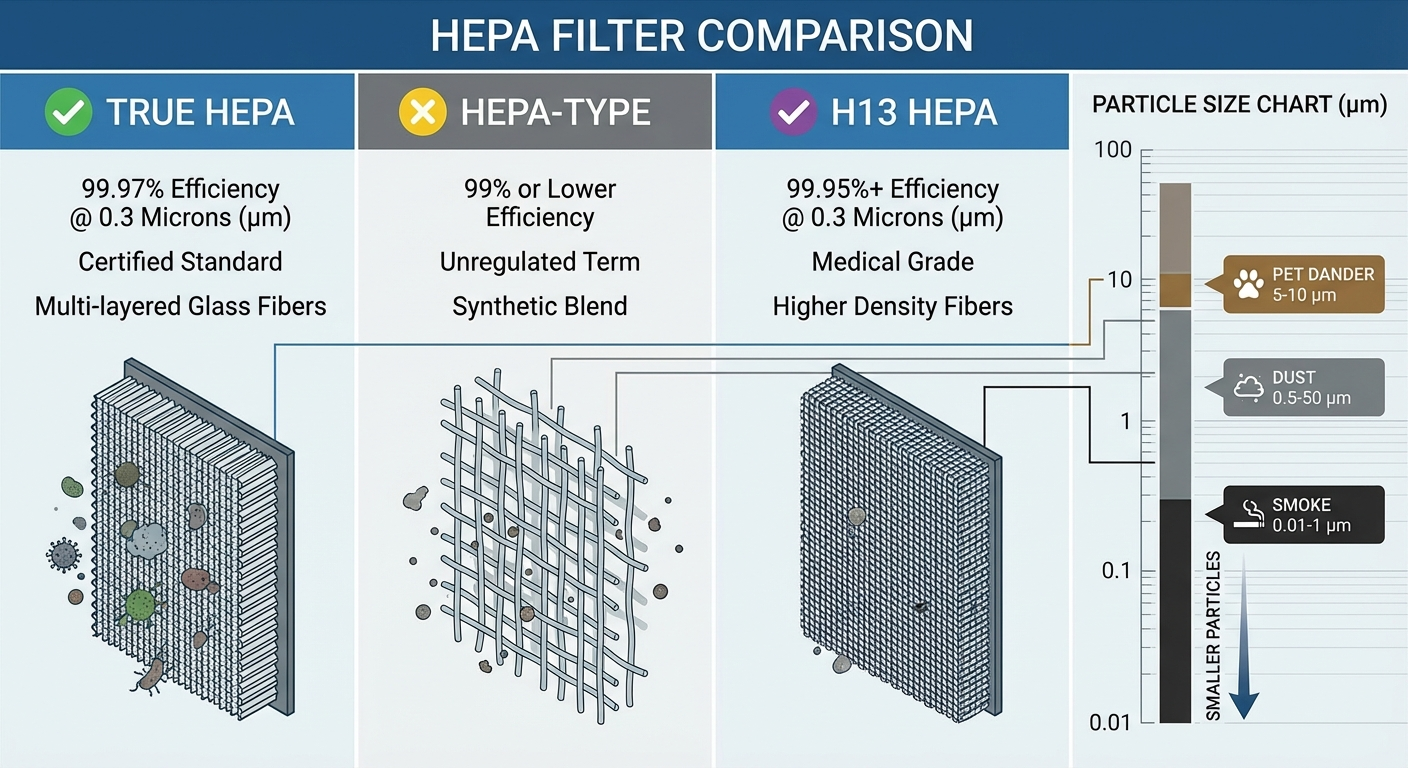
Most HEPA air purifiers use a multi-layer filter system: a pre-filter (often washable), a True HEPA or H13 HEPA media filter, and sometimes an activated carbon filter for odors and VOCs. The HEPA filter is the primary ongoing expense.
Pre-filters are typically washable mesh screens that capture large particles like hair, lint, and large dust. These are free to maintain — just vacuum or rinse them monthly. A clean pre-filter extends the life of the HEPA filter behind it by preventing large debris from clogging the fine filter media.
HEPA filters range from $20 for generic third-party replacements to $80 for brand-name originals. Replacement intervals are typically 6 to 12 months, though this depends heavily on air quality and usage. The general guidance from our air purifier filter replacement guide is to check filters monthly and replace when visibly discoloured or when the purifier's filter indicator light activates.
Activated carbon filters are sometimes integrated into the HEPA filter (a combined HEPA+carbon cartridge) or sold separately. Standalone carbon filters cost $10 to $30 and typically last 3 to 6 months. If your purifier uses a combined cartridge, the carbon layer is replaced along with the HEPA media.
Annual Filter Costs by Model
| Model | Filter Type | Filter Price | Replace Interval | Annual Filter Cost |
|---|---|---|---|---|
| Levoit Core 300S | HEPA+Carbon combo | $20 | 6–8 months | $30–$40 |
| Coway AP-1512HH | HEPA + carbon (separate) | $35 + $15 | 12 months | $50–$60 |
| Winix 5500-2 | HEPA + carbon | $40 + $15 | 12 months | $55 |
| Blueair Blue Pure 211+ | Particle + carbon fabric | $30 + $20 | 6 months | $50–$60 |
| Honeywell HPA300 | HEPA (3-pack) + pre-filter | $50 + $10 | 12 months | $60–$75 |
| Coway Airmega 400S | MAX2 combined filter x2 | $60 each | 12 months | $120 |
| Dyson TP09 | Sealed HEPA+carbon | $80 | 12 months | $80–$160 |
Third-Party vs OEM Filters
Third-party replacement filters are available for most popular models and cost 30 to 60 percent less than original brand filters. For the Levoit Core 300S, a two-pack of compatible HEPA filters can be found for $16 to $22, versus $20 to $25 for the official Levoit filter.
Are third-party filters safe to use? In most cases, yes — provided they are True HEPA rated and fit correctly with no air gaps around the edges. A poorly fitting filter allows unfiltered air to bypass the HEPA media, which defeats the purpose. We recommend reading reviews specifically for filter seal quality before purchasing third-party alternatives.
5 Most Cost-Efficient Air Purifiers for 2026
Based on our total annual running cost analysis, these five models deliver the best balance of air cleaning performance and ongoing affordability. Each model has been selected for its combination of low electricity consumption, reasonable filter costs, and effective HEPA filtration.
1. Levoit Core 300S
Best for: Lowest total running cost
Annual cost: ~$65/year
Room size: Up to 219 sq ft
Why: BLDC motor, auto mode, cheap filters
Check Price on Amazon →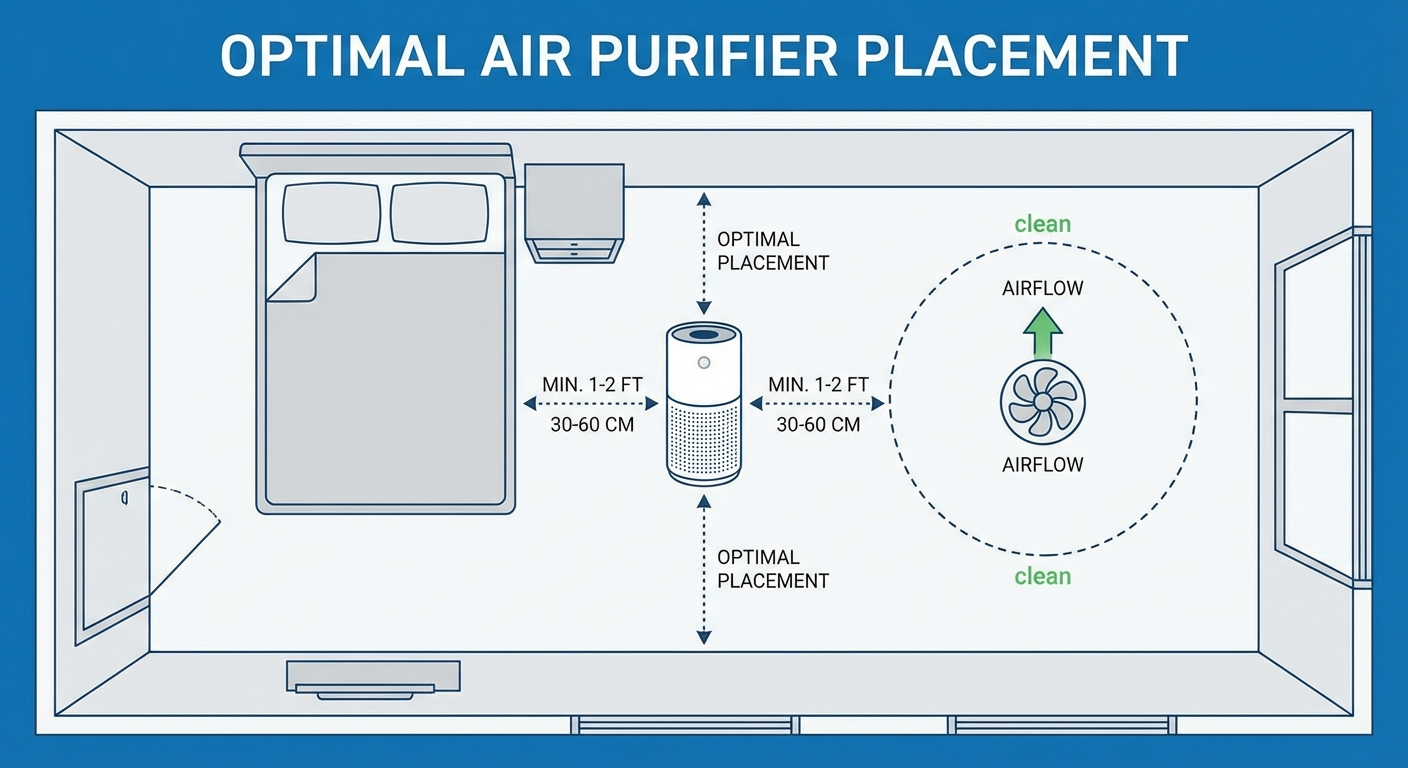
2. Winix 5500-2
Best for: Mid-size rooms on a budget
Annual cost: ~$97/year
Room size: Up to 360 sq ft
Why: Affordable filters, solid auto mode
Check Price on Amazon →
3. Coway AP-1512HH
Best for: Eco Mode saves up to 50% on electricity
Annual cost: ~$98/year
Room size: Up to 361 sq ft
Why: Eco Mode stops fan when air is clean
Check Price on Amazon →
4. Blueair Blue Pure 211+
Best for: Large rooms with low filter costs
Annual cost: ~$108/year
Room size: Up to 540 sq ft
Why: Great cost-per-square-foot ratio
Check Price on Amazon →
5. Honeywell HPA300
Best for: Maximum CADR for large spaces
Annual cost: ~$159/year
Room size: Up to 465 sq ft
Why: Highest CADR, widely available filters
Check Price on Amazon →5 Proven Strategies to Cut Air Purifier Running Costs
Whether you already own a purifier or are about to buy one, these five strategies can reduce your annual running costs by 30 to 60 percent.
1. Use Auto Mode Religiously
Auto mode is the single most effective cost-saving feature. When air quality is good — which is most of the time in a well-maintained home — auto mode drops the fan to its lowest speed, drawing as little as 5 to 15 watts. It only ramps up temporarily when cooking, vacuuming, or opening windows introduces a burst of particles.
Running on medium speed constantly costs 3 to 5 times more electricity than using auto mode in a typical home. The upfront cost of buying a model with a built-in air quality sensor pays for itself within the first year through electricity savings.
2. Clean Pre-Filters Monthly
A clogged pre-filter forces the motor to work harder to pull air through the restricted filter media. This increases wattage draw and reduces effective airflow simultaneously — you pay more electricity for worse performance.
Most pre-filters take 60 seconds to vacuum or rinse under running water. This simple monthly habit extends the HEPA filter lifespan by 20 to 30 percent and keeps electricity consumption at its rated level rather than allowing it to creep upward as the filter loads.
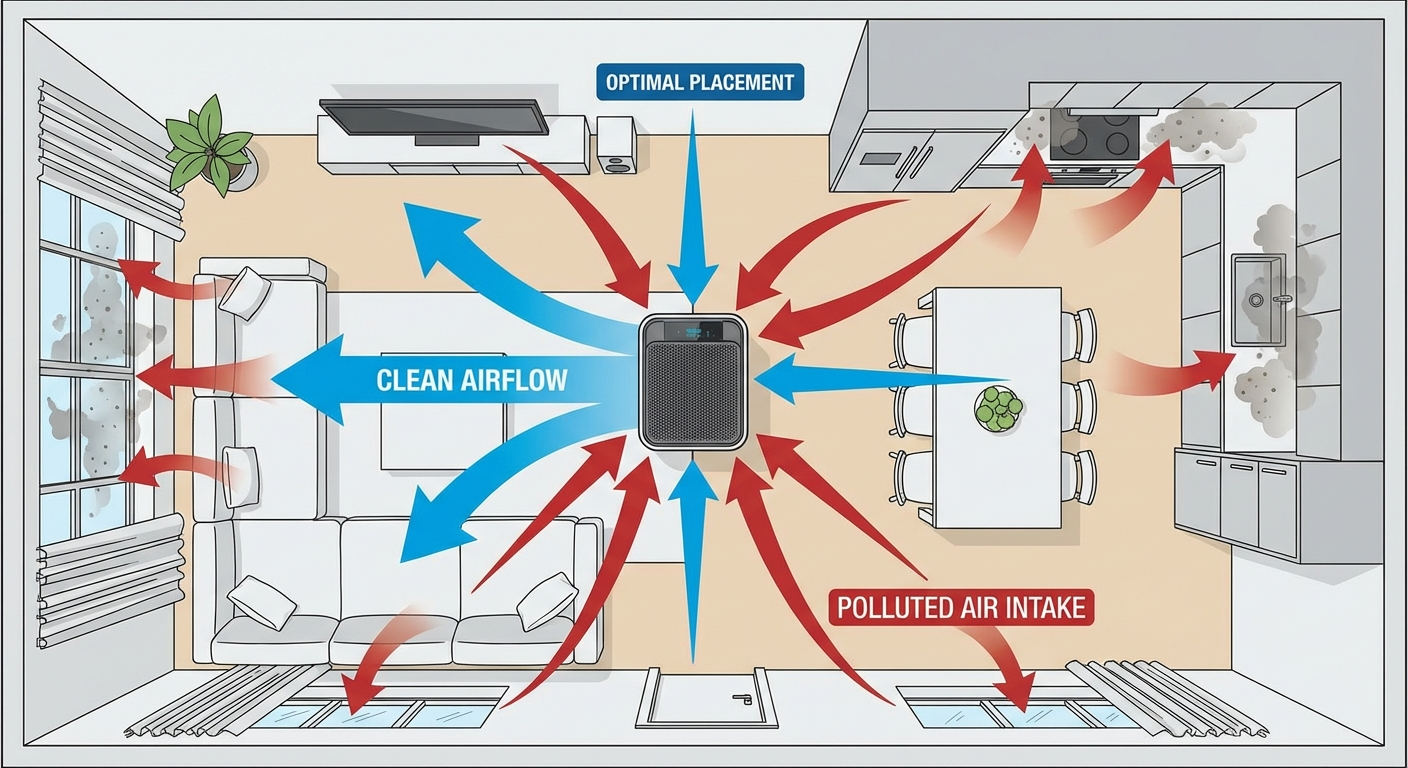
3. Right-Size Your Purifier to Your Room
An oversized purifier in a small room wastes money on equipment you do not need. An undersized purifier in a large room runs at maximum speed constantly, consuming maximum electricity while still failing to adequately clean the air.
Use the manufacturer's recommended room size as your guide. A purifier rated for 300 square feet running on medium speed in a 250 square foot room delivers excellent air quality at moderate electricity cost. The same purifier in a 500 square foot room must run on high speed continuously and still cannot achieve adequate air changes per hour. For those with large rooms over 500 square feet, choose a model properly rated for that space rather than overworking a smaller unit.
4. Keep Doors and Windows Closed
Every time you open a door or window, outdoor particles flood your indoor space, and your purifier must work harder (drawing more electricity) to bring levels back down. In high-pollen or high-pollution areas, this cycle of contamination and cleanup can double your electricity costs.
This does not mean you should never ventilate. Brief ventilation sessions (5 to 10 minutes) followed by closed-up purification are fine. But leaving windows open while running your purifier is the equivalent of running your air conditioning with the front door wide open.
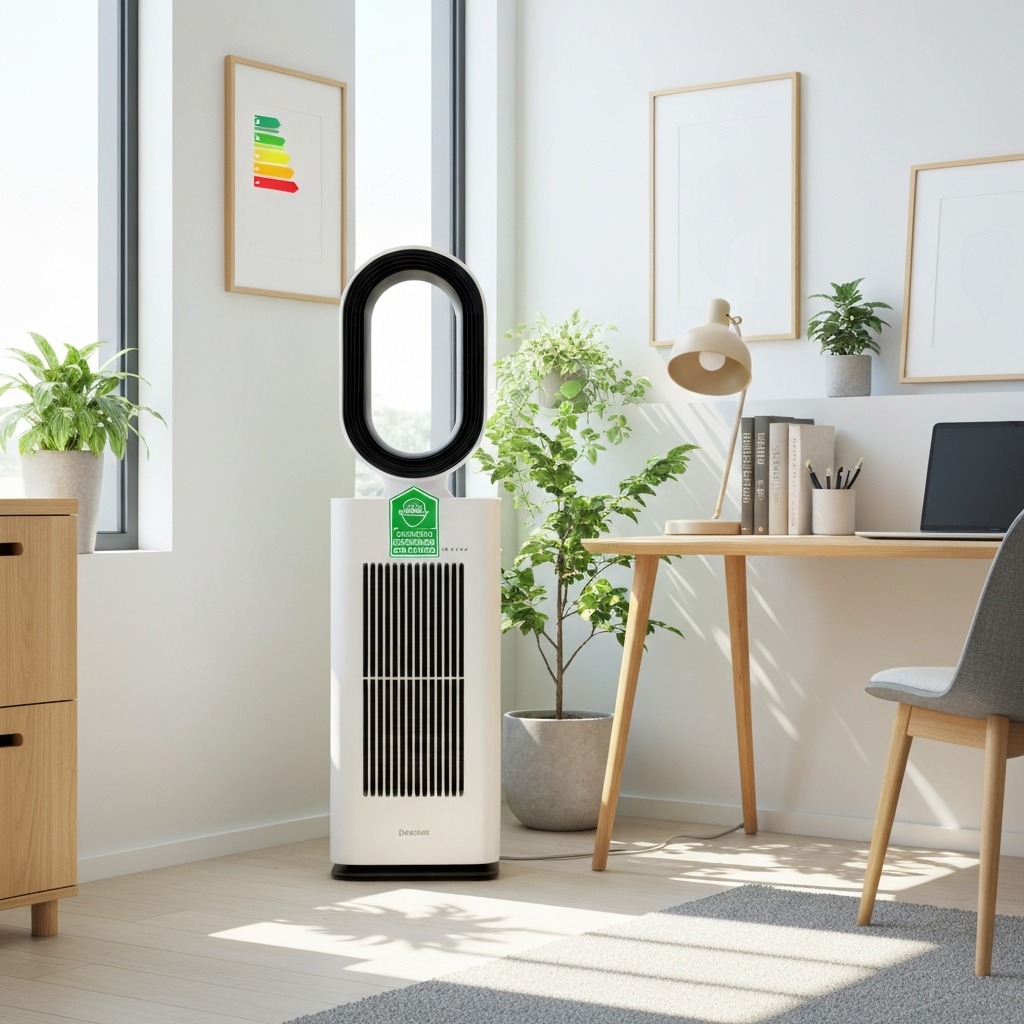
5. Buy Energy Star Certified Models
Energy Star certified air purifiers meet strict energy efficiency guidelines set by the US Environmental Protection Agency. These models use 25 to 40 percent less energy than standard models while delivering the same CADR performance.
The Energy Star label is a reliable shortcut when comparing models — any certified unit has been independently tested and verified for energy efficiency. When choosing between your best air purifier options, checking for Energy Star certification is one of the simplest ways to guarantee lower operating costs.
Air Purifier Costs vs Other Household Appliances
To put air purifier running costs into perspective, here is how they compare to appliances you already run daily without a second thought.
| Appliance | Typical Wattage | Hours/Day | Monthly Cost | Annual Cost |
|---|---|---|---|---|
| Air purifier (mid-range) | 30–60W | 12 | $2–$5 | $25–$60 |
| LED light bulb | 10W | 8 | $0.40 | $4.70 |
| Laptop | 50W | 8 | $1.90 | $23 |
| Desktop computer | 200W | 8 | $7.70 | $93 |
| Refrigerator | 150W | 24 | $17 | $210 |
| Window AC unit | 1,200W | 8 | $46 | $550+ |
| Space heater | 1,500W | 6 | $43 | $520+ |
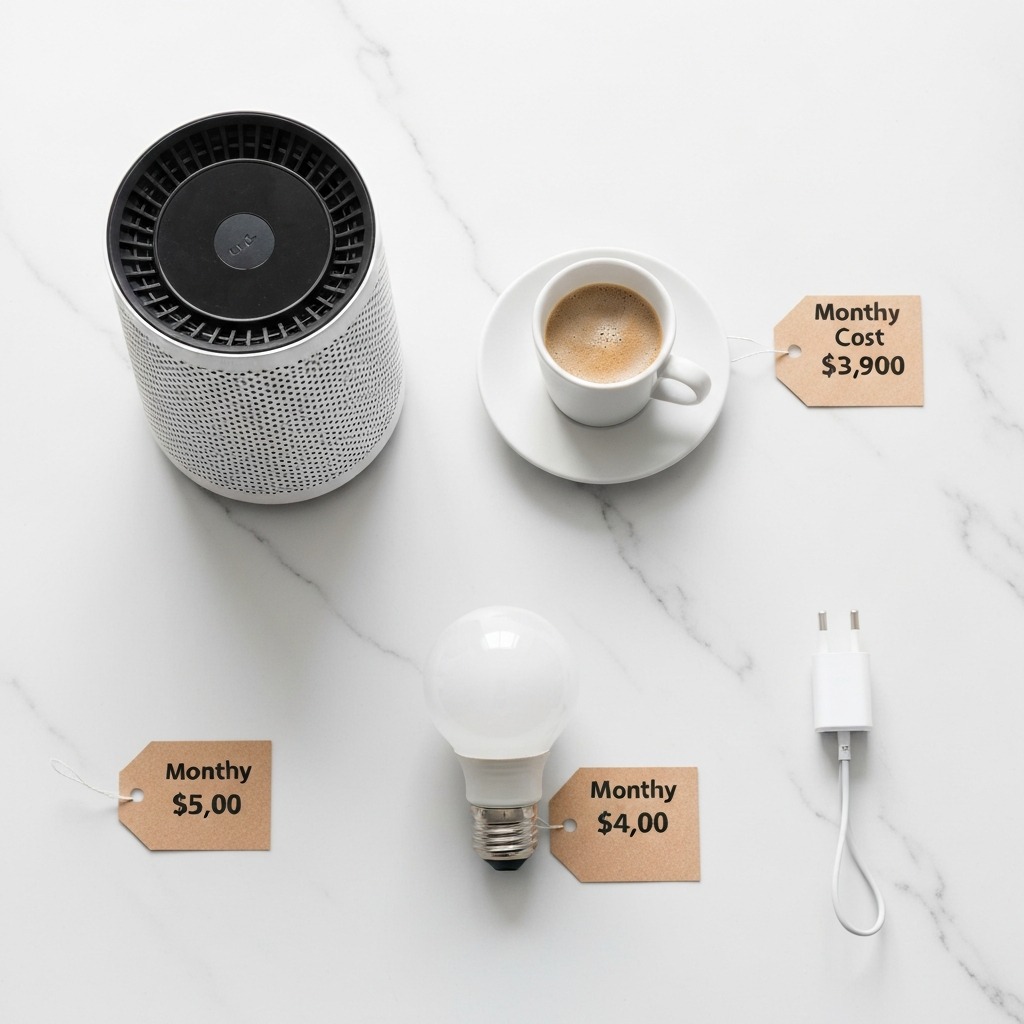
A mid-range air purifier costs less per month than a single 60-watt incandescent light bulb running the same hours. It is roughly equivalent to charging your phone — a cost so small it is invisible on your electricity bill.
The comparison to air conditioning is particularly relevant: many people run window AC units all summer without concern for the $50+ monthly electricity cost, yet hesitate to spend $3 to $5 per month on an air purifier that runs year-round.
Research increasingly suggests that clean indoor air supports reduced inflammation throughout the respiratory system, making the modest running cost of an air purifier a worthwhile investment in long-term health.
Does Room Size Affect Running Costs?
Yes — room size is one of the biggest factors in determining your real-world running costs, because it dictates the fan speed required to maintain adequate air changes per hour (ACH).
The Air Changes Per Hour Factor
For effective air purification, health authorities recommend 4 to 6 air changes per hour (ACH) in the room being purified. ACH means the entire volume of air in the room passes through the purifier's filter that many times each hour.
In a small bedroom (150 sq ft), a mid-range purifier easily achieves 6 ACH on its lowest or medium fan speed. In a large living room (400 sq ft), the same purifier might only achieve 2 ACH on medium, requiring high speed to approach adequate purification — and high speed means higher electricity consumption.
Cost Per Square Foot
A more useful way to think about running costs is the cost per square foot of purified air per year. Here is how five popular models compare:
| Model | Room Coverage | Annual Cost | Cost Per Sq Ft/Year |
|---|---|---|---|
| Levoit Core 300S | 219 sq ft | $65 | $0.30 |
| Coway AP-1512HH | 361 sq ft | $98 | $0.27 |
| Winix 5500-2 | 360 sq ft | $97 | $0.27 |
| Blueair Blue Pure 211+ | 540 sq ft | $108 | $0.20 |
| Honeywell HPA300 | 465 sq ft | $159 | $0.34 |
The Blueair Blue Pure 211+ offers the lowest cost per square foot at $0.20, making it the most economical choice for large-room purification. The Coway and Winix are tied for mid-size rooms at $0.27 per square foot per year.
The Two-Purifier Strategy
For homes with multiple rooms to cover, running two smaller purifiers in closed rooms is often cheaper than running one large purifier in an open-plan space. Two Levoit Core 300S units covering a bedroom and a home office (at $130/year combined) cost less than one Coway Airmega 400S trying to cover an open living area ($190/year) — and deliver higher ACH in each individual room because the doors create sealed zones.
Frequently Asked Questions
How much does it cost to run an air purifier per year?
The total annual cost to run an air purifier ranges from $66 to $304, depending on the model. This includes electricity ($25 to $144 per year based on 12 hours daily use at $0.16/kWh) and filter replacements ($30 to $160 per year). Energy-efficient models like the Levoit Core 300S cost as little as $66 per year total, while premium units like the Dyson TP09 can reach $265 or more.
Are air purifiers expensive to run on electricity?
No. Most air purifiers cost between $2 and $12 per month in electricity. A typical mid-range HEPA air purifier draws 30 to 60 watts, similar to a standard light bulb. Running a Levoit Core 300S for 12 hours per day costs approximately $2.10 per month in electricity at the US average rate of $0.16 per kWh. Even larger models rarely exceed $10 per month.
How much do replacement HEPA filters cost?
Replacement HEPA filters typically cost between $20 and $80 per filter, and most need replacing every 6 to 12 months depending on usage and air quality. Annual filter costs range from $30 for budget models like the Levoit Core 300S to $160 for premium units like the Dyson TP09 that use proprietary sealed filter systems. Using washable pre-filters and maintaining proper airflow extends HEPA filter lifespan.
Which air purifier is cheapest to run?
The Levoit Core 300S is the cheapest popular air purifier to run, with estimated annual costs of just $66 — approximately $25 in electricity and $40 in filter replacements. The Coway AP-1512HH is another affordable option at roughly $98 per year total. Models with washable pre-filters and energy-efficient motors consistently rank lowest in operating costs.
How can I reduce my air purifier running costs?
Five proven strategies: use auto mode so the fan adjusts to actual air quality instead of running full blast constantly, clean or vacuum pre-filters monthly to maintain airflow efficiency, right-size your purifier to your room so it is not overworking, keep doors and windows closed to reduce the particle load, and buy Energy Star certified models which use 25 to 40 percent less energy than standard units.
Is it cheaper to run an air purifier 24/7 or only at certain times?
Running an air purifier on auto mode 24/7 is often more cost-effective than turning it on and off. When you turn a purifier off, particle levels rise and the unit must work at high speed to clear the air when restarted, consuming more energy during those catch-up periods. Auto mode keeps the fan at minimum speed when air is clean, using just 5 to 15 watts, and only ramps up when particles spike.
Sources and Methodology
All electricity cost calculations in this article use the 2026 US Energy Information Administration (EIA) national average residential electricity rate of $0.16 per kilowatt-hour. Wattage figures are drawn from manufacturer specifications for each model's medium fan speed unless otherwise noted.
Filter replacement costs are based on current retail pricing on Amazon.com as of March 2026 for OEM (original manufacturer) replacement filters. Third-party filter pricing was reviewed but OEM prices are used as the baseline for consistency across brands.
Annual cost calculations assume 12 hours of daily operation at medium fan speed, which represents typical use in a bedroom (overnight) plus moderate daytime use. Actual costs may be lower with auto mode use or higher with continuous high-speed operation.
- US Energy Information Administration — "Electric Power Monthly: Average Retail Price of Electricity," Table 5.6.A, February 2026
- Association of Home Appliance Manufacturers (AHAM) — CADR and energy consumption data for certified air purifiers, 2025–2026 directory
- Energy Star — "Air Cleaners / Air Purifiers Key Product Criteria," EPA Energy Star Program Requirements v2.0
- Levoit, Coway, Winix, Blueair, Honeywell, Dyson — Official product specification sheets and user manuals for models reviewed
- Lawrence Berkeley National Laboratory — "Energy Use of Air Cleaners in Residential Buildings," LBNL Report, 2024
- EPA — "Guide to Air Cleaners in the Home," 2nd Edition, 2023
About the Author: Dr. Alex Chen is an indoor air quality specialist and the lead researcher at Air Purifier Report. With over a decade of experience in environmental health science, Alex tests and reviews air purification systems to help readers make evidence-based decisions about their indoor air quality. Alex holds advanced qualifications in environmental health and has contributed to published research on residential air filtration efficacy.